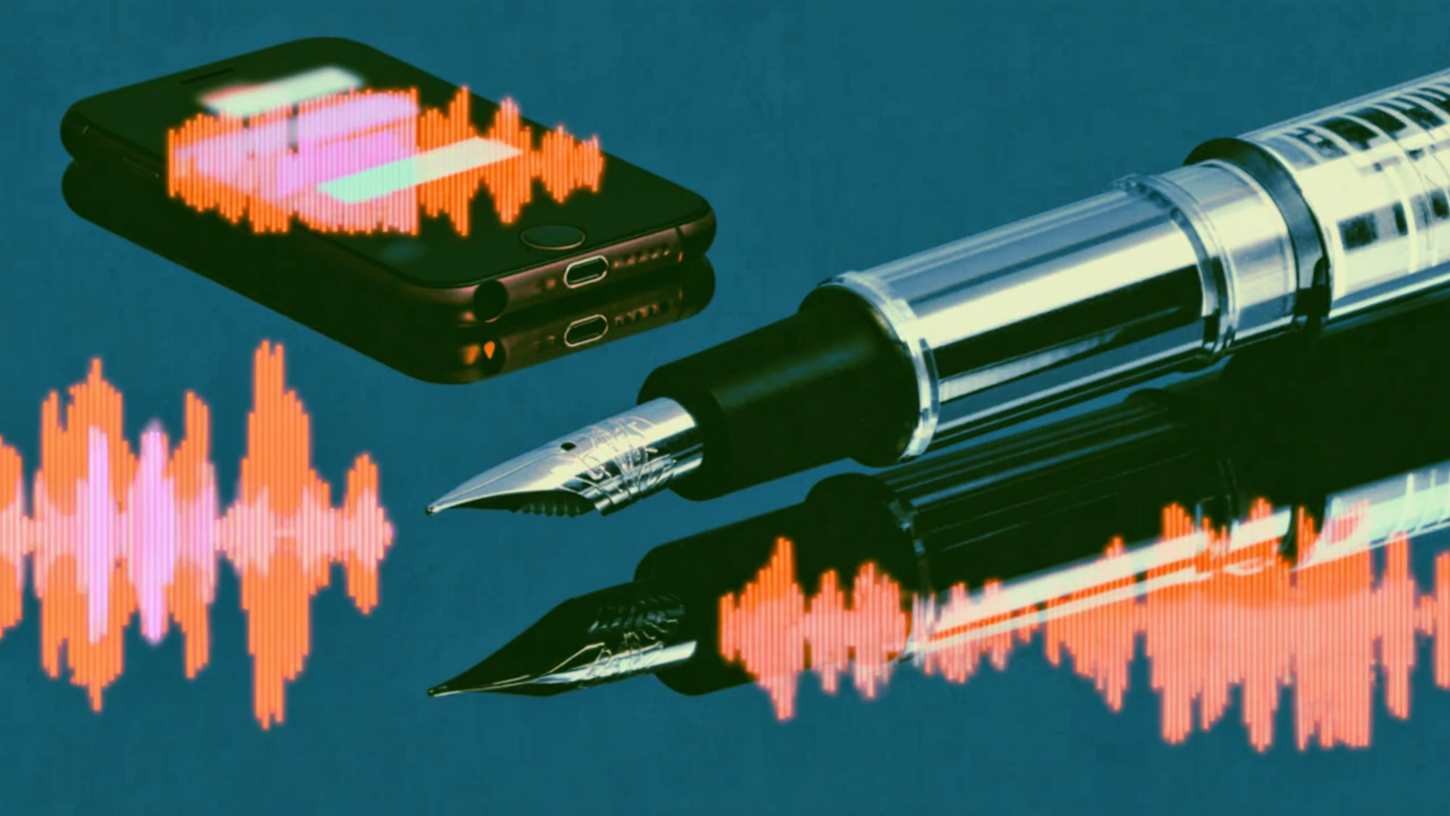



anufacturers have unlocked a simple formula to capitalize on the AI hardware craze: take ordinary items, incorporate microphones, and layer in an AI assistant.
The promise is an AI tool that escapes the traditional screen and accompanies you everywhere. While these products often do that, the issue is that their main features are often duplicative, overlooking the fact that AI assistants are in a device that's always with you. On your phone, you already have a voice recorder that, when combined with an arsenal of apps that can transcribe, analyze, and answer questions, can already deliver what most of these AI devices do.
A perfect example is a product I recently tried called the Flowtica Scribe, which calls itself "the world's first AI pen." If you are like my roommate and excitedly assumed an AI pen would do something groundbreaking, like digitally transcribe the words you write with it on paper, you may have the same reaction he did when finding out what it actually does.
"That's it?" he asked.
The Scribe pen was designed to record audio within a 16-foot range with just a two-second press on the top of the pen. It transcribes the audio, provides summaries, answers questions about the conversations, and showcases the highlights or action items.
It's a perfectly capable product. When I used it to document the process of booking flights with my boyfriend, the transcript was accurate, even though the cafe was loud and I kept shifting the pen away from us to see if it could still hear our conversation. The summary graphic was so detailed that it remembered bits I hadn't even remembered, such as where our layover was, and presented it all in a digestible format. The more in-depth summary was accurate as well.
But it'll cost you. The Flowtica Scribe retails for $159, or $209 for the Scribe and charging case, which offers up to one full week of battery life. There is also a basic AI plan that includes 300 AI minutes per month for all advanced features, with tiered plans for additional AI access at $10 or $20 per month.
This highlights one of the biggest pitfalls of this category: the product comes at a surprisingly high cost for what it is because the hardware itself includes complex components, such as tiny processors and microphones. Plus, users typically have to shell out extra money for a subscription.
Last week, Plaud unveiled its Plaud One AI-powered wireless earbuds, which record and transcribe audio, including phone calls, online meetings, and in-person conversations. The Plaud Agent is meant to "help turn conversations into useful output."
The Plaud charging case includes an eSIM that has a wireless connection to bypass a phone. Again, I can't think of a situation where I would have earbuds and not my phone or laptop. And it costs $249, a price tag that rivals high-end ear buds like the AirPods Pro.
Our Deeper View
My concern is that this entire category of AI devices is watering down and muddying the definition of an AI product. Ultimately, AI is behind the scenes powering features small and large on most tech products. For instance, washing machines have used load-sensing and fabric-detection algorithms since the 2000s. By today's standards, would this make those AI products? I've been a fan of the AI hardware category since smart glasses were the only entrant. Smart glasses give AI context about the world around you, so you're not stuck feeding it that context yourself. Audio products technically do this, but audio is already easy to feed AI without extra hardware. Visual context is a harder problem. Short of holding up your phone in your line of sight at all times, there's no easy way to capture it. Solving this removes a genuine point of friction and lets you tap into AI in a far deeper way. That's the kind of thing we need out of AI devices: something you can't easily do with your phone.