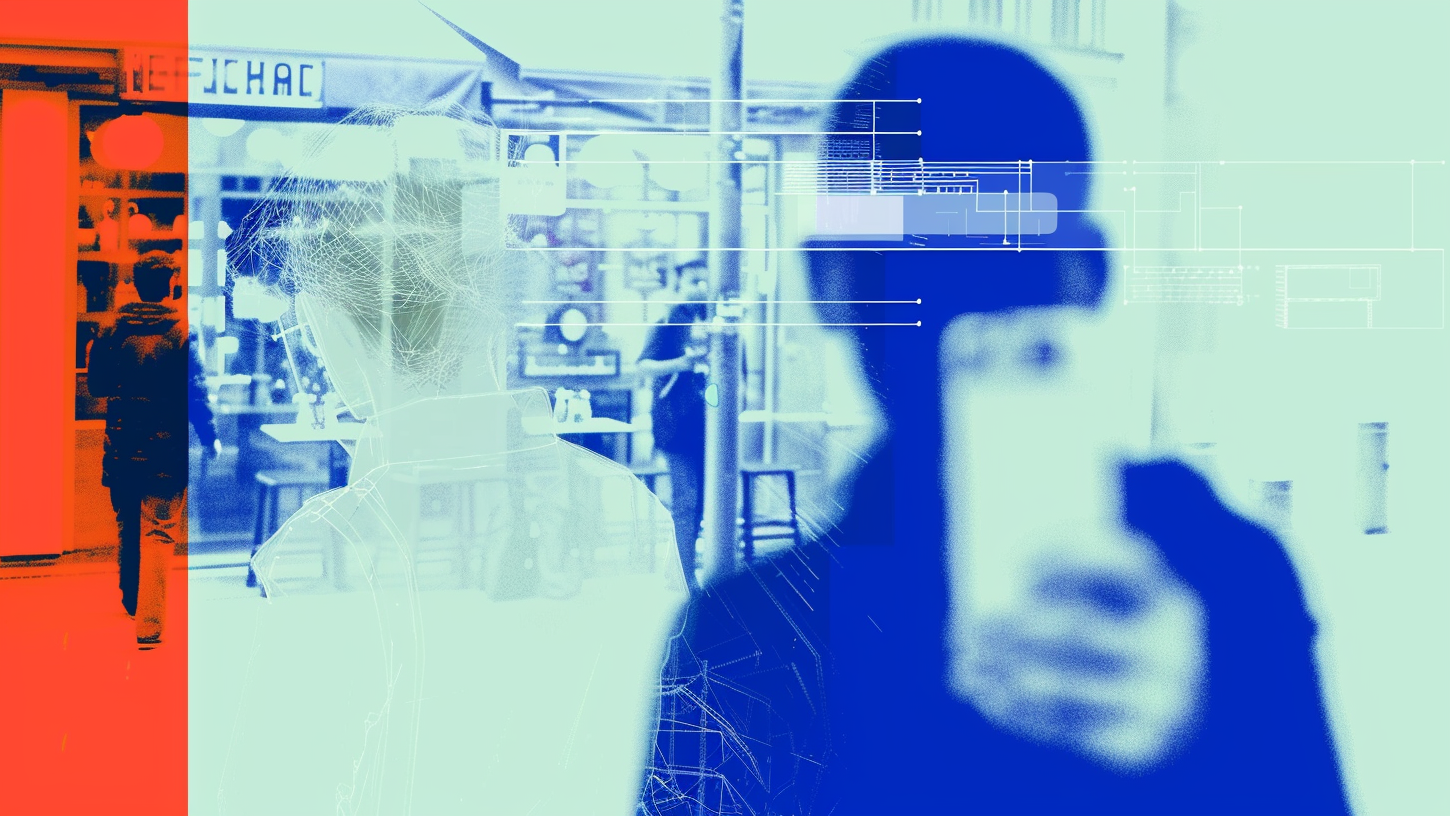


company is willing to pay people to capture real-world content to train robots. No, that’s not a Black Mirror episode, it's DoorDash’s new app.
On Thursday, DoorDash unveiled Tasks, a feature that pays Dashers to provide businesses with ground-level insights, from photographing restaurant food to capturing hotel entrances for easier deliveries. Win-win, right? Well, tucked below that is a paragraph about a new standalone app DoorDash is piloting.
“We’re also piloting a new standalone app where Dashers can complete activities like filming everyday tasks or recording themselves speaking in another language,” said DoorDash. “This data helps AI and robotic systems understand the physical world.”
Real-world data is one of AI's most valuable and limited resources. Without it, manufacturers are stuck training models on simulations that only approximate reality. That's likely why DoorDash is willing to pay upfront: it's a premium commodity they can upsell. DoorDash has not responded to a request for comment.
While getting paid to perform and record routine tasks may sound like a good way to make extra cash, users should soberly consider the privacy and security implications, which, according to Andrew Shimshock, CTO and Co-Founder of Mill Pond Research, a company focused on secure AI solutions, are numerous.
“Once an AI or robotic system is trained on biometric or spatial data and released into production, the underlying training data must be considered compromised,” said Shimshock. “Bad actors do not need to breach a server; they simply need access to query the AI.”
Shimshock also highlighted that once a person’s biological markers are baked into a multimodal AI, that data cannot be unlearned or deleted. Beyond the consenting individual’s data, there is also the question of what that means for individuals incidentally captured in the background of a task, without their knowledge or consent.
While dystopian, this approach isn’t new. Data from the popular Pokémon Go game, which had hundreds of millions of players wandering the streets to capture the game characters, has now been used to create a Visual Positioning System (VPS) to train delivery robots.
The lines of user consent are getting increasingly blurred in the era of AI. The question is, when is too much? It is an accepted truth that the entirety of the internet now lives in the datasets behind these powerful models, but what if our physical existence gets baked into them too?
Our Deeper View
DoorDash has long offered an accessible path to income, with few barriers to entry and real earning potential. That makes it genuinely valuable, which is why I worry that placing a comparatively easier task option alongside traditional deliveries could lead people to default to it without fully understanding the trade-offs. It is also worth considering that DoorDash likely stands to profit far more by batch-selling this data upstream, raising the question of whether contributors would be better served selling directly to buyers, if they can find the opportunities. But as long as supply meets DoorDash's demand, there is little incentive to cut out the middleman, and that is what makes this so difficult to untangle.