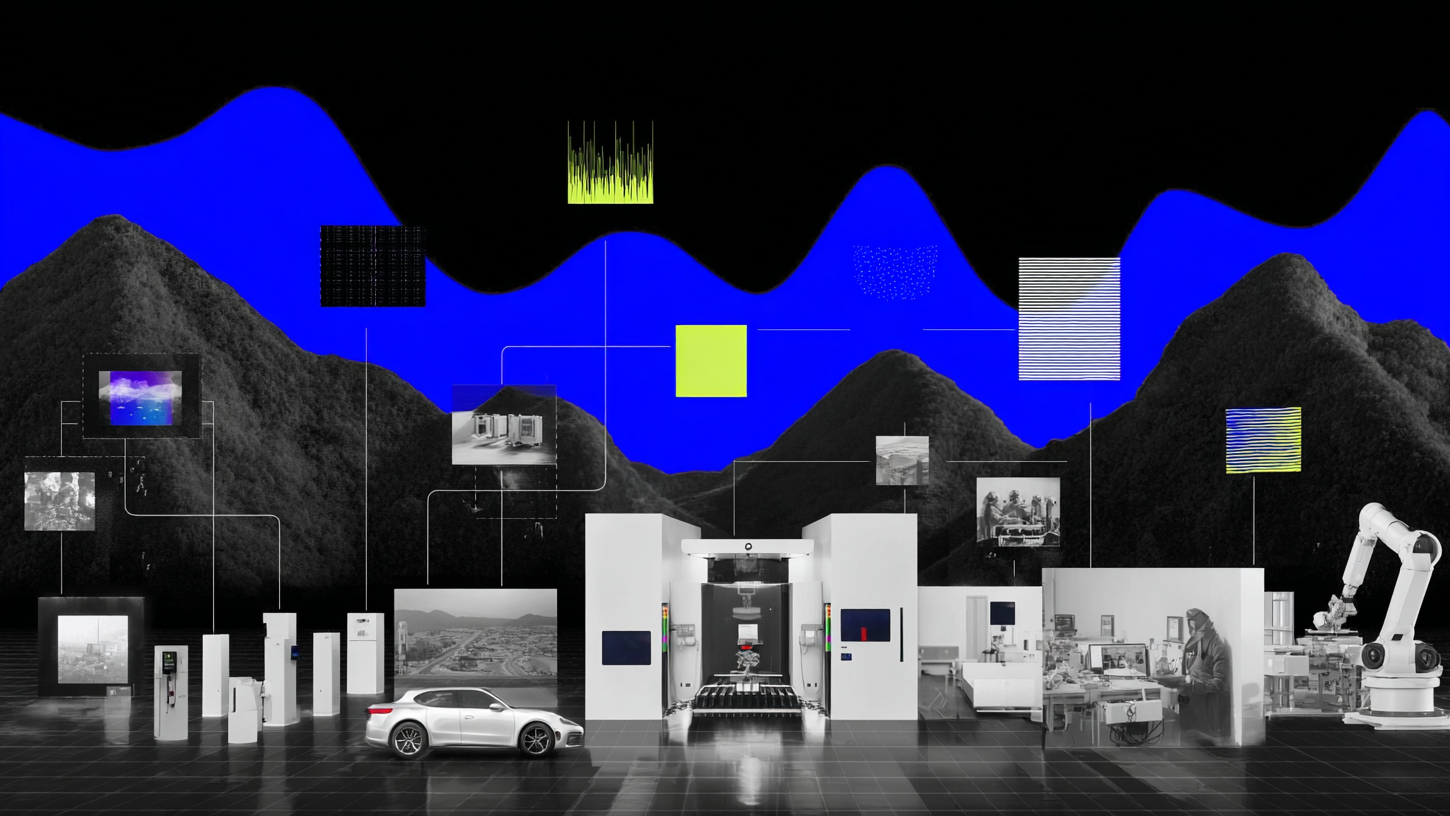

If you think AI is the world's next smartphone or cloud, Nvidia would like to change your mind.
Instead, Nvidia thinks AI equates more to underlying infrastructure like electricity or the internet. At HumanX in San Francisco on Monday, this was the topic of the opening keynote of the event, which brings together 6,000 people from across the AI industry to discuss how to use AI to solve business problems.
I'd tweak this idea to say that today's AI will evolve into intelligence so ubiquitous that we'll rarely mention it. But it's likely to power the next generation of tools, as well as the next set of technological and scientific breakthroughs.
Those promises are why the AI industry is in the midst of "the largest infrastructure buildout in human history," as HumanX CEO Stefan Weitz called it during Monday's keynote.
That's because all that intelligence requires a lot of hardware to run, and it's going to require a lot more in the years ahead as the number of people using AI continues to grow and those who are using it today keep finding more things to do with it.
"The connection between compute and intelligence is stronger than ever," Bryan Catanzaro, VP of applied deep learning research at Nvidia, said on Monday during the opening panel.
Nvidia has extrapolated all the technology it takes to power AI by coining the phrase "AI is a five-layer cake," which is the same phrase HumanX used for the opening keynote on Monday. Here's how the layers break down:
- Energy: Everything starts with power, and right now, this is the greatest constraint to scaling up AI to meet future demand.
- Chips: Today's AI workloads need GPUs to run tasks in parallel at a massive scale, high-bandwidth memory to move data at breakneck speeds, and fast interconnections between all the pieces.
- Infrastructure: Here's where the physical components come together, from land to construction to power delivery to networking to cooling to server racks. This is where AI factories are emerging.
- Models: The AI models understand topics across a ton of different domains, and now that's expanding to other kinds of models as well, from scientific discoveries to autonomous systems to robotics.
- Applications: The place where almost all of the value is created remains the application layer. It's where we get daily tools, agents, coding helpers, self-driving cars, industrial robots, and lots of other things being invented day by day.
Our Deeper View
In the months and years ahead, all these advances will depend heavily on bringing costs as low as possible and performance as high as possible. "When it comes to inference, it's not just about latency and cost, it's about quality," said Lin Qiao, CEO of Fireworks AI, another member of the panel. By "quality," Qiao was getting at the fact that accuracy and the elimination of hallucinations will also be huge factors in advancing intelligence to the point where it becomes a utility. Think of it like electricity getting refined and optimized so it doesn't throw breakers and the internet bringing widespread broadband with 99.9% uptime to most of the population. One of the other things that Qiao mentioned was a future where everyone will have their own model, optimized for their needs, interests, and daily tasks. That kind of individualization is where intelligence could go far beyond electricity and the internet as a general-purpose technology.